Atomic Wallet: Complete Guide to Secure Login and Crypto Management
Cryptocurrency wallets are essential tools for managing digital assets, and Atomic Wallet stands out as a popular non-custodial wallet that allows users to store, exchange, and stake cryptocurrencies. With Atomic Wallet, users maintain full control over their private keys, which is critical for security and long-term asset management. Logging into Atomic Wallet, whether via desktop or mobile, is the gateway to accessing your crypto holdings, performing exchanges, and managing staking operations. This guide provides a comprehensive overview of Atomic Wallet login, security practices, troubleshooting tips, and best practices to safeguard your assets.
What Is Atomic Wallet?
Atomic Wallet is a decentralized, non-custodial cryptocurrency wallet designed to give users complete control over their digital assets. Unlike centralized exchanges, Atomic Wallet does not store your private keys; instead, they remain encrypted on your device. Key features include:
Multi-Currency Support: Atomic Wallet supports over 500 cryptocurrencies, including Bitcoin, Ethereum, Litecoin, and various ERC-20 tokens.
Atomic Swaps: Native peer-to-peer exchange functionality allows users to swap crypto without relying on third parties.
Staking: Users can stake certain cryptocurrencies directly from the wallet to earn rewards.
Cross-Platform Access: Available for Windows, macOS, Linux, Android, and iOS.
Secure Backup: A single 12-word mnemonic phrase ensures you can restore your wallet across devices.
Atomic Wallet’s login is not traditional in the sense of a server-based login. Instead, it relies on private keys and the recovery phrase for authentication and access, which ensures users retain full control over their funds.
Atomic Wallet Login Process
Unlike centralized platforms that require email and password, Atomic Wallet uses a locally stored encrypted wallet file and a password chosen during setup. Here’s a step-by-step overview:
Step 1: Install Atomic Wallet
Visit the official Atomic Wallet website or download the app from trusted app stores.
Ensure you download the correct version to avoid phishing or malicious software.
Step 2: Open the Wallet and Select Login Option
Upon opening the wallet, users can either:
Create a New Wallet (if this is the first time using Atomic Wallet)
Restore an Existing Wallet using the 12-word recovery phrase
Step 3: Enter Your Password
For existing wallets, Atomic Wallet will prompt you to enter the password you set during wallet creation. This password encrypts your private keys locally and grants access to the wallet interface.
Step 4: Access the Dashboard
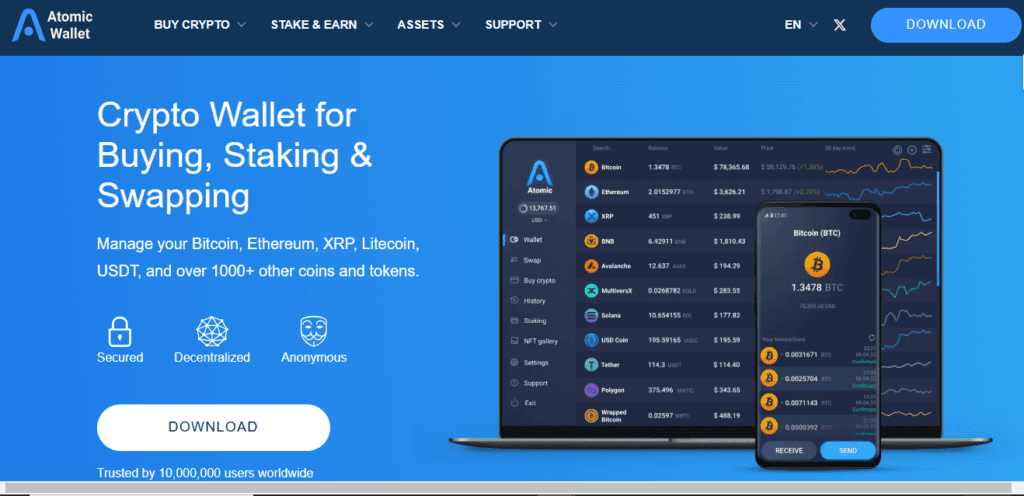
Once the password is verified, users gain access to the wallet dashboard, which displays:
Cryptocurrency balances
Transaction history
Staking options and rewards
Atomic Swap functionality
Step 5: Optional Security Enhancements
Enable biometric login on mobile devices for convenience.
Use device-level security (PIN, fingerprint, Face ID) to protect access.
Security Measures in Atomic Wallet
Since Atomic Wallet is non-custodial, security is entirely in the hands of the user. Some essential security features include:
Local Private Key Storage: Your private keys never leave your device.
Encrypted Wallet File: The wallet data file is encrypted with your password.
12-Word Recovery Phrase: This is the ultimate backup to restore your wallet on any device.
No KYC Requirements: Since it is non-custodial, there is no personal data storage that can be compromised.
Biometric and Device Security: Mobile apps allow additional authentication methods.
These security measures ensure that even if the device is compromised, an attacker cannot access funds without the password and recovery phrase.
Common Login Issues and Solutions
While Atomic Wallet is generally straightforward, users may encounter problems. Here are some common issues and how to resolve them:
Forgotten Password
If you forget your password, Atomic Wallet cannot recover it because passwords are only stored locally. The only way to regain access is to restore the wallet using your 12-word recovery phrase.
Lost Recovery Phrase
If the recovery phrase is lost, there is no way to restore the wallet. Users are strongly advised to write down the recovery phrase securely and keep it in a safe location.
App Crashes or Device Issues
Occasionally, app crashes or OS updates can interfere with wallet access. Reinstalling the app and restoring using the recovery phrase usually resolves the issue.
Compatibility Problems
Always ensure you are using the latest version of Atomic Wallet compatible with your device. Older versions may have bugs or security vulnerabilities.
Best Practices for Secure Atomic Wallet Access
Security is paramount when dealing with non-custodial wallets. Best practices include:
Store Your Recovery Phrase Offline: Never save it digitally on your computer or online storage.
Use a Strong Password: Combine letters, numbers, and symbols to encrypt your wallet securely.
Enable Biometric Authentication: For mobile devices, use fingerprint or Face ID.
Keep Software Updated: Ensure both your operating system and wallet app are up to date.
Avoid Public Wi-Fi for Transactions: Public networks can be insecure and increase the risk of hacking.
Regular Backups: Consider multiple secure backups of your recovery phrase in physically separate locations.
Following these steps ensures you maintain complete control and security over your funds.
Features Accessible After Login
Logging into Atomic Wallet unlocks a wide range of cryptocurrency management features:
Crypto Exchange: Swap between supported cryptocurrencies using atomic swaps or integrated exchange partners.
Staking Rewards: Stake supported coins like Tezos, Tron, or Cosmos directly from the wallet and earn passive income.
Portfolio Tracking: View real-time balances, asset allocation, and market prices.
Transaction Management: Send and receive cryptocurrencies quickly and efficiently.
Custom Token Support: Add custom ERC-20 or BEP-2 tokens to the wallet for full portfolio visibility.
Atomic Wallet combines access to multiple features in a single interface, making login the gateway to complete crypto management.
Why Atomic Wallet Login Differs from Centralized Platforms
Unlike platforms such as exchanges, Atomic Wallet does not store user data or credentials on a server. This has key implications:
No Email or Server Login: Access is entirely through password + recovery phrase.
Full Control of Assets: You retain ownership of private keys.
Responsibility for Security: Users are solely responsible for protecting access.
This decentralized approach maximizes control but also requires users to take security seriously.
Troubleshooting and Support
Atomic Wallet offers multiple resources to help users resolve login and wallet issues:
Official Website FAQ and Support: Step-by-step guides and articles.
Community Support: Forums and social media communities offer solutions from experienced users.
Email Support: Direct contact for account or transaction-related questions.
Always ensure support requests are submitted through official channels to avoid phishing scams.
Conclusion
Logging into Atomic Wallet is the first step toward managing your cryptocurrency securely and efficiently. Unlike centralized platforms, the wallet relies on locally stored private keys and a recovery phrase, giving users complete control over their assets. By following secure login practices—such as strong passwords, safe storage of recovery phrases, biometric authentication, and regular backups—users can ensure their funds remain protected.
Atomic Wallet also provides advanced features like staking, atomic swaps, and portfolio tracking, all accessible immediately after login. While security and self-responsibility are paramount, Atomic Wallet’s design allows users to confidently manage hundreds of cryptocurrencies in a single, decentralized interface.
In short, mastering the Atomic Wallet login process is not just about accessing your wallet—it is about securing your crypto future, maintaining ownership of your assets, and maximizing the full potential of your digital portfolio.